
Nanion is based on technology developed in Japan and mainly uses a naturally-occuring mineral that can be extracted from sand and rocks. The active ingredient is certified safe for use in consumer products like sunscreens, cosmetics, toothpaste, paints, and food production.
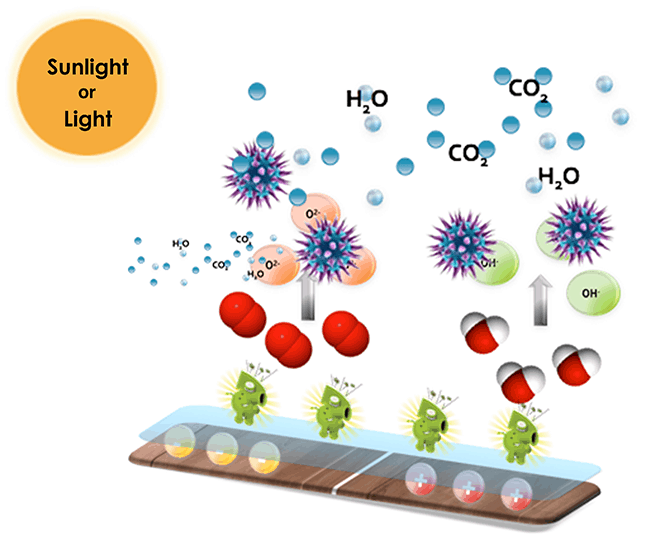
Due to its photocatalytic nature, Nanion has sterilising and deodorising properties when exposed to sunlight or ultraviolet (UV) radiation. As such, Nanion has many practical applications including in the removal of organic and airborne contaminants. It has the ability to remove up to 99% of harmful bacteria and viruses.
When irradiated by sunlight, Nanion also exhibits a superhydrophilic (attraction to water) property which also makes it useful as coating for building surfaces, self-cleaning glass, and anti-fogging glass coating as it can help sweep away contaminants.
Nanion therefore is a replication of nature’s way of sterilising and cleaning surfaces and air, whether in small-scale domestic use for homes or large-scale commercial applications for buildings.
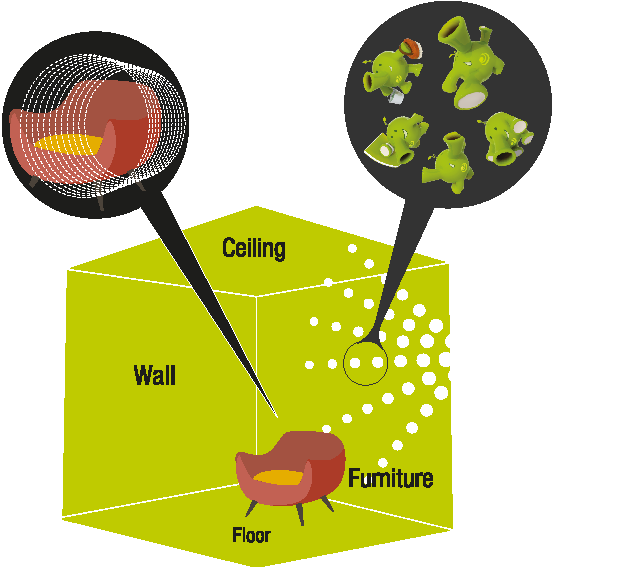
The Nanion nano particles are sprayed by a professional to coat your walls, floors, ceilings, and furniture.
Thanks to the special electrostatic sprayer, the Nanion coating adheres to all types of surfaces, even hard-to-reach spots like in between cabinets and under sofas and other furniture.
As long as there is some light the Nanion coating will be actively combating fungi, germs, odours and VOCs, turning them into harmless moisture and CO2.