Understanding Volatile Organic Compounds (VOCs): Sources, Risks, and Impact
What Are Volatile Organic Compounds (VOCs)?
Volatile Organic Compounds (VOCs) are chemicals that easily become gases or vapors at room temperature due to their high vapor pressure and low water solubility. Many VOCs are synthetic chemicals used in a variety of industrial applications, including the manufacturing of paints, pharmaceuticals, and refrigerants. Common examples of VOCs include industrial solvents like trichloroethylene, fuel oxygenates such as methyl tert-butyl ether (MTBE), and by-products from chlorination processes like chloroform. VOCs are also found in petroleum fuels, hydraulic fluids, paint thinners, and dry cleaning agents, making them prevalent ground-water contaminants.
Sources of VOCs
VOCs are emitted as gases from certain solids or liquids and can be found in a wide range of products. Common sources include:
- Paints and Lacquers: VOCs are often used in paint formulations to enhance application properties.
- Paint Strippers and Thinners: These products contain VOCs to dissolve paint and coatings.
- Cleaning Supplies: Many household and industrial cleaners release VOCs.
- Pesticides: Some pest control products emit VOCs during their application.
- Building Materials and Furnishings: VOCs can be found in items like carpets, adhesives, and wood products.
- Office Equipment: Devices such as copiers and printers emit VOCs, especially when in use.
- Correction Fluids and Carbonless Copy Paper: These products contain VOCs for writing and printing purposes.
- Craft and Graphic Materials: Glues, adhesives, permanent markers, and photographic solutions also release VOCs.
Health and Environmental Impact
VOCs can have both short-term and long-term health effects, depending on the level and duration of exposure. Concentrations of VOCs are often significantly higher indoors—up to ten times higher—compared to outdoor levels. This elevated indoor concentration can lead to various health issues, including respiratory problems, headaches, and other adverse effects.
Additionally, VOCs are a major concern for environmental pollution. They contribute to ground-water contamination and can play a role in forming ground-level ozone and smog, which have further implications for air quality and climate change.
Managing VOC Exposure
To minimize exposure to VOCs, consider the following strategies:
- Use Low-VOC Products: Opt for paints, cleaners, and other products labeled as low in VOCs.
- Ensure Proper Ventilation: Increase airflow in areas where VOCs are used or emitted.
- Follow Safety Guidelines: Adhere to manufacturer instructions and safety recommendations for products that contain VOCs.
Understanding and managing VOCs is crucial for protecting both human health and the environment. By being aware of sources and potential risks, you can take proactive steps to reduce exposure and mitigate their impact.

Effective VOC Removal with Nanion VOC Removr: Safe Solutions for a Healthier Environment
What Are Volatile Organic Compounds (VOCs)?
Volatile Organic Compounds (VOCs) are chemicals that easily vaporize into the air due to their high vapor pressure and low solubility in water. These compounds, often found in industrial solvents, fuels, paints, and cleaning agents, contribute significantly to air pollution and pose risks to human health. Common VOCs include trichloroethylene, methyl tert-butyl ether (MTBE), and chloroform. Their presence in products like paints, varnishes, and cleaning supplies makes them prevalent in indoor environments, where their concentrations can be up to ten times higher than outdoors.
The Impact of VOCs on Health and the Environment
VOCs are known to cause serious air pollution and can have detrimental effects on health, including respiratory issues, headaches, and other health problems. The removal of VOCs is crucial to ensure a safe and healthy living environment. In addition to their health impacts, VOCs contribute to environmental pollution, including ground-water contamination and the formation of smog and ozone, which further affects air quality and climate.
Introducing Nanion VOC Removr: A Proven Solution
To effectively combat the challenges posed by VOCs, consider using Nanion VOC Removr. This advanced, water-based coating is specifically designed to tackle formaldehyde (HCHO) and other VOCs. Nanion VOC Removr has been rigorously tested and proven to be both safe and effective for removing VOCs from various surfaces.
Benefits of Nanion VOC Removr:
- Proven Effectiveness: Demonstrated to successfully remove formaldehyde (HCHO) and other harmful VOCs.
- Safe Application: A water-based formula that is safe for use on a variety of surfaces.
- Comprehensive Disinfection: Provides additional disinfecting benefits to ensure surfaces are clean and VOC-free.
Why Choose Nanion VOC Removr?
Nanion VOC Removr addresses the critical need for VOC removal in indoor environments, improving air quality and contributing to better overall health. By choosing this effective and safe solution, you can significantly reduce VOC levels and enhance the quality of your indoor air.
Take Action Against VOCs
Removing VOCs is essential for protecting health and the environment. Nanion VOC Removr offers a reliable and proven method for tackling these pollutants effectively. Make the smart choice for cleaner air and a healthier living space with Nanion VOC Removr.
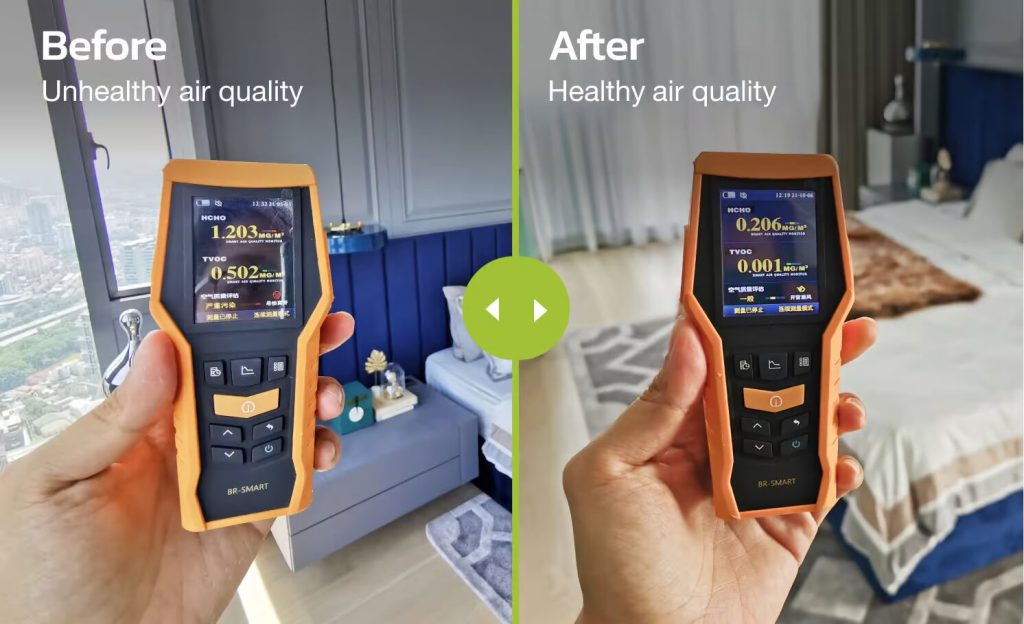
“Real-Time VOC Monitoring: Nanion’s Advanced Device for Accurate Formaldehyde and VOC Measurement”
Nanion experts utilize a cutting-edge VOC monitoring device that measures formaldehyde (HCHO) and other volatile organic compounds (VOCs) in real time, providing immediate and accurate results. This advanced VOC monitoring device ensures precise detection of VOC levels, enabling effective management of air quality and timely intervention to maintain a healthier indoor environment.